

News
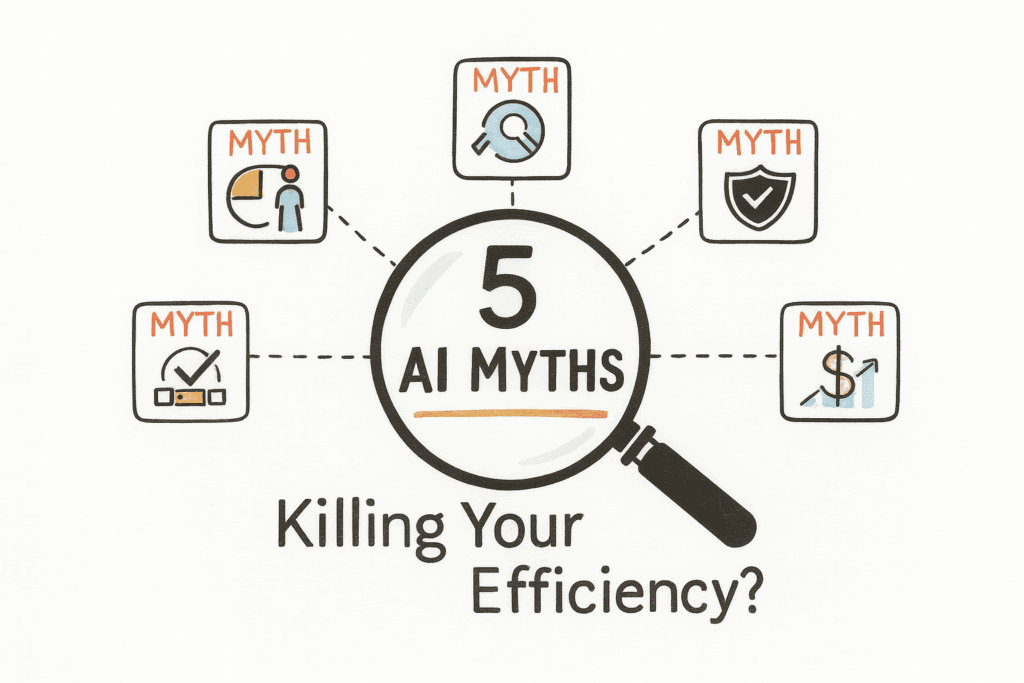
Estes 5 Mitos sobre IA Estão a Prejudicar a Sua Eficiência?
NILG.AI · 7 de julho de 2025
A Inteligência Artificial (IA) evoluiu de uma promessa futurista para uma força transformadora no panorama empresarial atual. Contudo, paralelamente ao seu crescimento, surgiram diversos mitos e meias-verdades sobre IA que criam hesitação, paralisam a tomada de decisão e deixam muitas empresas para trás.
Na NILG.AI, acreditamos que o maior risco não é tentar IA, mas ignorá-la por receios infundados.
É por isso que estamos aqui para desmontar os cinco principais mitos sobre IA que podem estar a atrasar a sua jornada em direção à eficiência e inovação.
Mito #1: "Preciso de Quantidades Massivas de Big Data"
Esta é uma das convicções mais enraizadas: para usar IA, necessita de uma base de dados do tamanho da Google ou da Amazon. Esta noção, herança da era do "Big Data", leva muitos gestores a pensar: "Não temos dados suficientes, portanto IA não é para nós." A realidade, felizmente, é muito mais flexível.
Embora grandes volumes de dados sejam úteis, a IA moderna evoluiu dramaticamente. Técnicas como transfer learning permitem que modelos pré-treinados sejam ajustados para tarefas específicas usando conjuntos de dados muito menores, mas de elevada qualidade. Além disso, o surgimento da IA Generativa democratizou ainda mais o acesso. Atualmente, pode começar a gerar valor com os dados que a sua empresa já produz diariamente, provenientes de vendas, operações ou interações com clientes.
Mito #2: "Os Meus Dados Têm de Ser Perfeitos e Impecáveis"
A célebre frase "Lixo Dentro, Lixo Fora" (Garbage In, Garbage Out) tem verdade, mas conta apenas metade da história. O receio de ter dados "sujos" ou inconsistentes leva muitas empresas a empreender projetos de limpeza de dados que duram anos, adiando indefinidamente a implementação de IA. Após todo esse tempo, descobrem que os dados operacionais, por natureza, continuam ruidosos e imperfeitos.
Uma abordagem mais pragmática e eficaz é reconhecer que o mundo real é desordenado. Em vez de perseguir a perfeição, os sistemas de IA podem ser concebidos e treinados para lidar com essa imperfeição. Modelos robustos conseguem identificar padrões, preencher lacunas e ajustar-se a inconsistências. A limpeza e preparação de dados são parte integral de um projeto de IA, não uma barreira intransponível que o impede de começar.
Mito #3: "IA É Apenas para Gigantes Tecnológicos com Orçamentos Ilimitados"
Quando as pessoas pensam em IA, as primeiras imagens que vêm à mente são de gigantes do Vale do Silício com orçamentos de investigação e desenvolvimento na casa dos mil milhões. Esta associação cria a ilusão perigosa de que IA é um luxo inacessível para a maioria das empresas.
Este cenário já não é verdadeiro. A democratização da tecnologia impulsionada pela computação em nuvem, plataformas de IA como Serviço (AIaaS) e parceiros especializados tornaram a Inteligência Artificial viável para empresas de todos os tamanhos. Na NILG.AI, os nossos clientes variam desde PME industriais a usar visão computacional para controlo de qualidade até pequenos retalhistas a otimizar inventário com análise preditiva.
IA entrega valor em todo o espectro, independentemente do tamanho da empresa:
| Tamanho da Empresa | Aplicações Potenciais de IA | Benefício Principal |
|---|---|---|
| Profissional Independente / Freelancer | Criação automática de conteúdo, email marketing personalizado, agendamento inteligente | Aumento de produtividade pessoal |
| Pequena Empresa (PME) | Manutenção preditiva, previsão de abandono de clientes, otimização de inventário | Eficiência operacional melhorada e ROI |
| Grande Empresa | Deteção avançada de fraude, hiper-automatização da cadeia de abastecimento, personalização em larga escala | Vantagem competitiva estratégica e liderança de mercado |
O foco não está no tamanho da sua empresa, mas na magnitude do problema que quer resolver.
Mito #4: "Os Modelos de IA São 'Burros' ou, Pelo Contrário, Infalíveis"
Existe uma visão polarizada das capacidades de IA. É vista ou como um sistema rígido e "burro", incapaz de lidar com a nuance do mundo real, ou como uma entidade mágica e perfeita que nunca comete erros. Ambas as perspetivas estão erradas e ignoram onde reside o verdadeiro poder da tecnologia.
IA não é perfeita, mas também os humanos não são. A verdadeira revolução acontece na colaboração entre homem e máquina. IA funciona como um copiloto inteligente, amplificando as capacidades humanas. Consegue analisar milhares de variáveis em segundos para fundamentar uma decisão, detetar anomalias numa linha de produção que o olho humano perderia, e automatizar tarefas repetitivas para que a sua equipa se possa focar em estratégia e criatividade. O objetivo não é substituir a inteligência humana, mas potencializá-la.
Mito #5: "Inteligência Artificial É uma Solução 'Plug-and-Play'"
No mercado atual, é fácil encontrar promessas de soluções de IA que pode instalar com um clique para resolver magicamente todos os seus problemas. Embora a tecnologia seja mais acessível, IA está longe de ser uma ferramenta "plug-and-play". É poderosa, mas não é mágica.
Uma implementação bem-sucedida de IA requer mais do que software; requer estratégia. É essencial compreender os processos empresariais, alinhar a tecnologia com os objetivos da empresa e garantir que a solução se integra adequadamente nos fluxos de trabalho existentes. Tentar adotar IA sem uma estratégia clara é como comprar um motor de Fórmula 1 sem ter o carro, a equipa ou a pista.
O Maior Erro de Todos? Esperar Demasiado Tempo.
Enquanto muitas empresas se veem paralisadas debatendo estes mitos, os seus concorrentes estão em ação. Estão a executar pequenos projetos piloto, a aprender com os seus dados e a construir uma vantagem competitiva que se tornará cada vez mais difícil de igualar.
Se ainda está a questionar como IA se pode adaptar ao seu negócio, o momento de agir é agora. Não deixe que mitos e incerteza o impeçam de explorar uma das maiores oportunidades de crescimento desta década.
Pronto para desmontar os mitos de IA na sua empresa e encontrar aplicações práticas que entreguem impacto real? Vamos conversar.
Quer aprofundar esta ideia?
Marque uma reunião com Kelwin Fernandes
Conhecer Kelwin Saber Mais