

News
EcoRouteAI: Waste Collection Point Optimization with Artificial Intelligence
Kelwin · September 30, 2024
Portugal's Strategic Plan for Urban Waste (PERSU) 2030 has set ambitious targets for waste management, aiming to increase recycling rates and improve environmental sustainability. However, current recycling and waste separation rates remain below what is needed, both nationally and across Europe, creating significant challenges for meeting these objectives.
In response to this situation, an innovative project is being developed in partnership between NILG.AI and ALGAR, focused on increasing the efficiency of selective waste collection in the Algarve. The project uses Artificial Intelligence to optimize the location of waste collection points, making selective waste collection more efficient and accessible to residents.
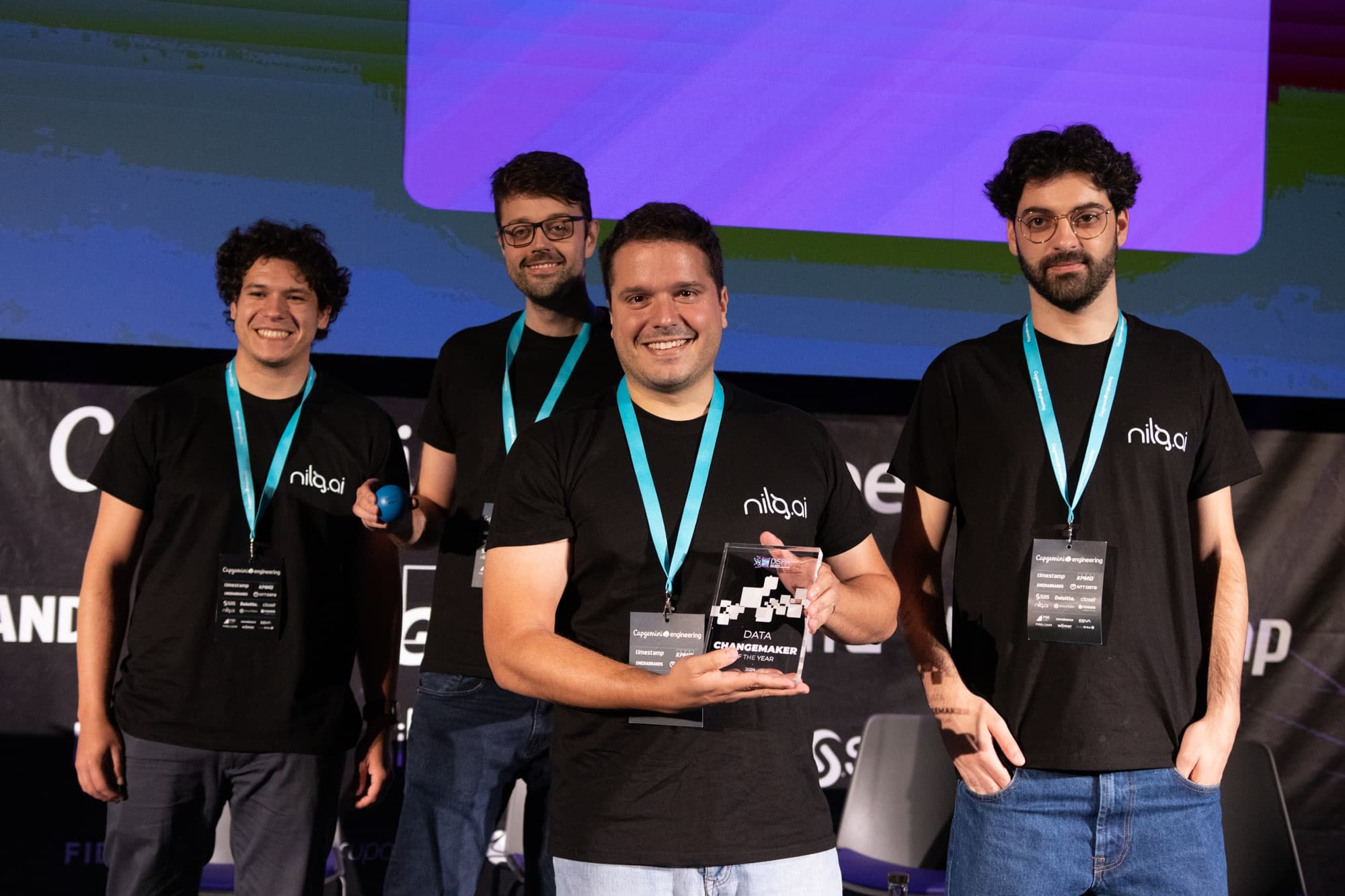
The project won the Data Changemaker of the Year award, a national recognition from the Data Science Portuguese Association (DSPA) and NOVA School of Business and Economics (NOVA SBE) for its environmental impact.
The System: Demand Forecasting, Image Analysis, and Optimization
The project leverages both internal and external data sources, covering a 3-year period in the Algarve region. The data is multimodal in nature, including: temporal data, geospatial data, and imagery. Specifically:
- Historical waste collection records for each collection point in the Algarve, with daily logs of plastic, glass, and paper quantities collected.
- Precise geolocation of all waste collection points in the region.
- Census demographic data, including address information, population density, and other relevant variables.
- Information about the road network, including direction and width of roads, as well as nearby services such as restaurants, hospitals, and schools.
- Street and satellite imagery from Google Satellite View, used to identify, evaluate, and prioritize locations based on eligibility criteria for installing new containers.
The data volume is substantial, comprising 1.4M collection records, 15k collection points in the Algarve, multiple variables, and multimodal data sources, ensuring detailed and accurate analysis to optimize the distribution of waste collection points.
Predictive Models: How Much Waste Will Be Generated? Can We Place a Collection Point?
The project developed predictive models to estimate waste generation in new areas, while street imagery data is used to assess location feasibility, ensuring they meet the requirements for container installation. The system also includes heuristic optimization models that analyze the existing network of collection points and suggest adjustments to maximize waste collection efficiency.
Project Impact
The impact of this solution is significant. During the pilot phase in the municipalities of Lagoa and São Brás de Alportel, the AI system demonstrated over 80% agreement between its recommendations and decisions made by human experts. Based on these results, the goal is to expand implementation across the entire Algarve region, and eventually scale the project to other areas of the country.
This project not only improves waste management at the local level but also has the potential to contribute to national and European sustainability targets. By increasing residents' access to selective waste collection, the solution encourages greater participation in the recycling process, resulting in a significant increase in the amount of waste recycled. Additionally, the system optimizes available resources, reducing the time and costs involved in identifying locations for new collection points and improving collection efficiency.
Implementing this type of technology also opens the door to new opportunities. In future phases, the system could suggest the relocation of existing collection points and optimize collection routes, dynamically adjusting the process to daily needs of residents and companies responsible for waste collection.
As the project grows, there is significant potential for expansion to other areas and municipalities, aiming to reach coverage for up to 60% of the Portuguese population. This impact reinforces the importance of investing in advanced technological solutions, such as AI, to solve complex problems related to waste management and sustainability.