AI Automations • AI Strategy • AI4business • AI4tech • Artificial Intelligence •
Discover the strategic benefits of AI in the workplace: Boost productivity and decisions
NILG.AI on Feb 17, 2026
?>
The term ‘AI’ gets tossed around so much it’s starting to lose its meaning. It’s easy to dismiss it as just another tech buzzword. But what are we really talking about when we say “AI in the workplace”?
This isn’t about some far-off future with sentient robots. It’s about practical, tangible tools that are already creating a competitive advantage for businesses today. The real power of AI is that it acts as a force multiplier for your team, supercharging the skills they already have.
Why AI Is More Than Just a Buzzword
Think of it like this: you’re giving every employee a smart assistant that handles the tedious, low-value parts of their job. The endless data entry, the repetitive report pulling, the sifting through mountains of information—all of it gets taken off their plate.
This frees them up to focus on what actually matters: strategic thinking, creative problem-solving, and building real relationships with customers. The goal isn’t to replace your people; it’s to augment their abilities, making their work more impactful and, frankly, more enjoyable.
Shifting from Hype to Practical Application
Thankfully, the conversation is finally shifting from abstract hype to concrete applications. For AI and data consulting businesses, the game is all about pinpointing specific, high-value problems that the right technology can solve right now. It’s about finding the little (and big) points of friction in your daily operations and smoothing them over with a targeted AI solution.
When you take this practical approach, you start seeing real, measurable results pretty quickly.
Less Operational Drag: Automating routine tasks like data entry or generating standard reports doesn’t just save time; it slashes the risk of human error.
Faster Insights: An AI model can tear through a massive dataset in minutes, spotting patterns and opportunities that a human analyst might take weeks to find, if they find them at all.
A More Engaged Team: When you liberate your team from monotony, you give them the headspace to innovate, think strategically, and tackle bigger challenges.
The core strategy is simple: Let machines do what they do best—process insane amounts of data at lightning speed—so your people can focus on what they do best—think, create, and connect.
In this guide, we’ll break down these real-world benefits of AI in the workplace. We’ll get into the specifics of how you can boost efficiency, make smarter decisions, and build a better work environment for your entire team.
Give Your Team Their Time Back with Automation
What if you could give every single employee a dedicated personal assistant? Someone who could handle all the repetitive, mind-numbing tasks that clog up their day, freeing them to focus on the work that actually requires their brainpower. This isn’t some far-off dream; it’s one of the most immediate and powerful benefits of bringing AI into the workplace.
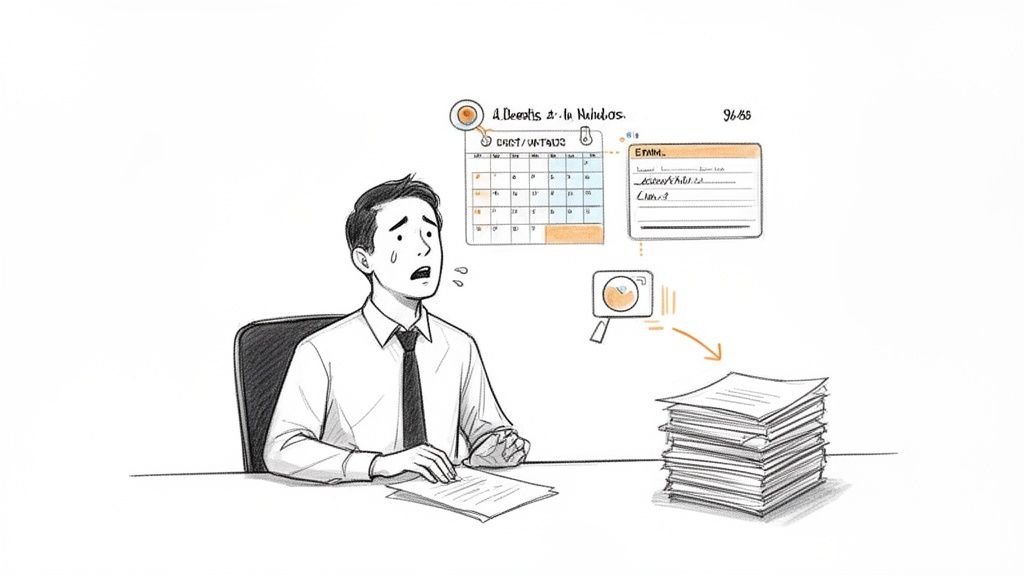
AI-powered automation is built to take over the low-value, high-volume work that eats away at your team’s day. I’m talking about things like manual data entry, pulling together the same weekly reports, or trying to coordinate schedules. They’re necessary evils, but they drain time and energy from your most valuable asset: your people.
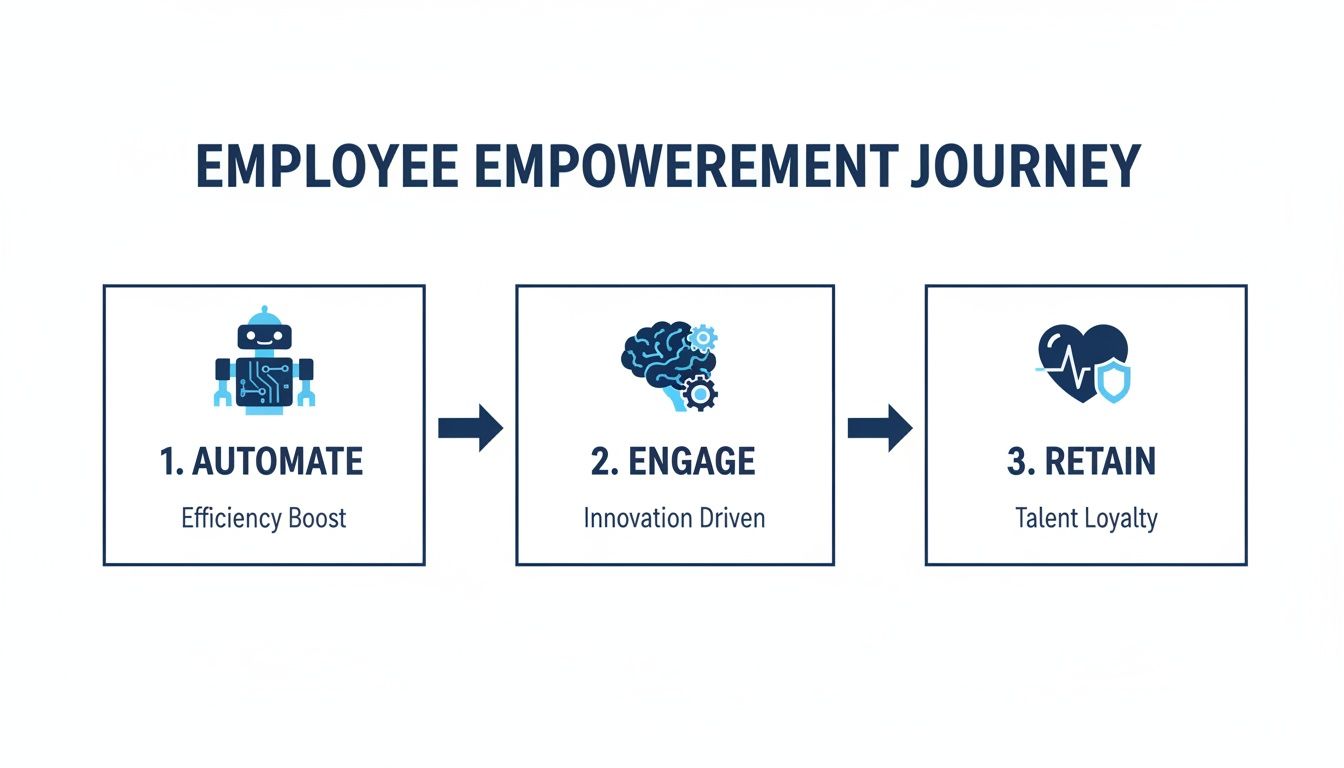
By automating these processes, you’re doing more than just saving a few hours. You’re fundamentally changing the nature of work. Your skilled professionals can finally shift their attention to complex problem-solving, strategic planning, and creative thinking—the stuff that actually moves the needle.
From Repetitive Tasks to Strategic Impact
This shift from manual grunt work to strategic contribution creates a powerful ripple effect. It’s not just a theory; employees feel the difference immediately. A Microsoft Work Trend Index report found that a whopping 90% of knowledge workers say AI saves them time, and 85% report it helps them focus on their most important work.
This lines up with bigger-picture projections. The potential is massive, with some estimates suggesting AI could unlock $4.4 trillion in annual global productivity. The data, which you can dig into deeper on platforms like Kore.ai, points to one clear conclusion: automation frees people up for more strategic roles.
When you put this into practice, the results are clear as day.
Finance teams can automate invoice processing and expense approvals, cutting down on errors and letting accountants concentrate on financial analysis and forecasting.
HR departments can use AI to screen resumes for key qualifications, giving recruiters more time for in-depth interviews with top-tier candidates.
Marketing teams can automatically generate performance reports, freeing up their time to actually analyze the data and craft better campaigns.
The real win here isn’t just about speed. It’s about unlocking your team’s true potential. When people aren’t bogged down by tedious tasks, their engagement and job satisfaction shoot up, which naturally leads to higher-quality work and lower turnover.
The following table shows just how AI automation can directly translate into measurable improvements across different business functions.
How AI Automation Boosts Key Workplace Metrics
Area of Impact
Metric Improvement
Example Application
Operations
25% faster processing times
Automating order fulfillment and inventory management.
Finance
30% reduction in invoice errors
AI-powered data extraction and validation for accounts payable.
Customer Service
40% increase in first-contact resolution
AI chatbots handling common queries, freeing agents for complex issues.
HR
50% less time spent on candidate screening
Automated resume parsing and initial candidate matching.
Marketing
20% increase in campaign ROI
AI-driven analysis of ad performance and automated reporting.
As you can see, the impact is concrete and measurable, touching nearly every corner of the business by making processes smarter and more efficient.
Identifying the Right Processes for Automation
The secret to getting automation right is to start smart. Not every task is a good candidate, and trying to automate everything at once is a surefire way to get nowhere. This is where getting some expert guidance really pays off. A good partner can help you pinpoint the processes with the highest potential for impact—the ones that are repetitive, rule-based, and soaking up the most time.
By targeting these “quick wins” first, you can demonstrate real value fast and build the momentum you need for a wider rollout. Our guide to intelligent process automation dives deeper into how to build this kind of strategic roadmap. This targeted approach ensures your investment delivers a clear return, boosting both the bottom line and team morale.
Make Smarter Decisions with Data You Can See
Good decisions are built on good data, but let’s be honest—most companies are swimming in it. It’s simply not possible for any human team to manually go through every customer email, market fluctuation, and internal report.
Think of AI as a super-powered magnifying glass. It can spot patterns and trends buried in your data that are completely invisible to the naked eye.
AI algorithms chew through massive datasets in the blink of an eye, pulling out the exact insights you need to make a move. This is one of the most powerful benefits of AI in the workplace because it lets you get ahead of the curve. Instead of just reacting to what happened last quarter, you can start predicting what’s coming next with real confidence.
For leaders, this means having the clarity to make faster, smarter calls. You’re no longer just running on gut feelings; you’re backing your intuition with solid proof.
From Raw Data to Actionable Strategy
Turning a mountain of raw information into a clear plan is where AI and data experts really shine. It’s all about connecting what the AI can do with what you need to achieve.
This isn’t just about pretty charts on a dashboard. It’s about asking smarter questions and letting your data give you the answers.
Predictive Sales Forecasting: Ditch the old “last year plus 5%” model. AI can analyze thousands of factors—from weather patterns to competitor promotions—to forecast sales with incredible accuracy.
Early Market Shift Detection: AI can scan social media chatter, news reports, and economic data to flag emerging customer trends or competitive threats way before they show up in your sales figures.
Operational Risk Mitigation: By analyzing data from your production line or supply chain, AI can spot the signs of a potential breakdown or quality issue before it grinds everything to a halt.
It’s no surprise that research shows AI-powered firms have faster cycle times and make better decisions. That’s a massive advantage in any industry. Looking ahead, some experts predict that generative AI will help automate up to 30% of U.S. work hours by 2030, a lot of which will involve spotting these kinds of patterns and risks in real-time. You can dig into these AI adoption trends on morganstanley.com.
Gaining a True Competitive Edge
At the end of the day, making smarter, data-backed decisions is what separates the leaders from the laggards. It means you can put your resources where they’ll have the most impact, sidestep costly financial risks, and jump on opportunities your competitors haven’t even noticed yet.
The core advantage is clarity. AI clears away the noise, presenting you with the insights needed to move forward with conviction and drive sustainable growth for your business.
This is more than just a trend; it’s a fundamental part of how successful businesses operate now. To see how you can build this muscle in your own company, check out our guide on data-driven decision-making. It’s the key to turning your data from a dormant asset into your most valuable strategic weapon.
Unlock Your Team’s True Potential
Let’s talk about something more important than spreadsheets and process maps: your people. It’s easy to get lost in the numbers, but the real magic of AI happens when it makes work better for your team. This isn’t just about speed; it’s about creating a place where people genuinely want to be.
Think about the daily grind. All those repetitive, mind-numbing tasks are the biggest culprits behind burnout and checking out. When you hand that stuff over to AI, you’re not just saving time—you’re giving your people their brainpower back. They can finally focus on the interesting, strategic parts of their jobs they were hired for in the first place.
Grow Your People, Grow Your Business
AI isn’t here to replace your team; it’s here to help them grow. Imagine giving every single employee a personal career coach that knows exactly what they need to learn next.
That’s what AI can do. It can create personalized training programs that pinpoint skill gaps and suggest the right courses or projects to fill them. It helps people build new skills that make them more valuable and prepares them for their next step up the ladder. This isn’t just a nice idea—Deloitte found that 58% of Gen Z employees believe AI will actually improve their work-life balance by clearing their plates.
Focusing on your team’s development pays off in huge ways:
Boosted Job Satisfaction: When people see you’re investing in them, they’re happier and more motivated. It’s that simple.
Better Employee Retention: People stick around when they see a future for themselves at your company. This cuts down on the massive cost and headache of turnover.
An Empowered Culture: Your team stops worrying about being replaced by robots and starts seeing AI as a tool that helps them tackle bigger, more exciting challenges.
The ultimate goal is to create a workplace where people feel supported, valued, and genuinely excited to contribute. That’s how you get a virtuous cycle going: a happy, engaged team sparks the innovation that drives real business growth.
From Drudgery to Daydreams
When your team isn’t drowning in administrative work, something amazing happens: they get creative. They have the mental space to think big, cook up new ideas with their colleagues, and figure out brilliant ways to make your customers happy.
A good AI and data consulting partner can help you build this kind of culture. They’ll pinpoint the best tasks to automate to free up your team and help you introduce tools that actually support their growth. It’s all about making sure the technology serves your people, not the other way around.
Your Practical Roadmap to Capturing AI Benefits
Alright, knowing what AI can do is one thing. Actually making it happen in your business and seeing those benefits on your P&L is another beast entirely. It’s not about flipping a magical “AI switch”; it’s about a deliberate, well-thought-out plan. You have to build a bridge from where you are today to where you want to be.
A clear, phased approach helps you sidestep the common landmines and ensures your investment actually pays off. It’s more than just buying new software—it’s about having a strategic roadmap. This is where partnering with an AI and data consulting firm can be a game-changer. They bring the experience to guide you through each stage, making sure you don’t just adopt AI, but truly master it.
Pinpoint High-Impact Opportunities First
The first question you should ask isn’t, “What cool AI tool can we buy?” The right question is, “What’s our biggest business headache right now?” Seriously. The most successful AI projects always start by targeting a specific, high-value problem.
Look for the bottlenecks, the mind-numbing repetitive tasks, or the opportunities you know you’re missing. Is your sales team spending half their day on lead qualification instead of selling? Is your support team swamped with the same five questions over and over? Focusing on a real pain point means your first AI initiative will deliver clear, undeniable value.
Start Smart with Pilot Projects
Diving headfirst into a company-wide rollout is a classic recipe for disaster. A much smarter move is to start small with a controlled pilot project. This is your chance to test the waters, iron out the wrinkles, and—most importantly—score a quick win.
A successful pilot builds momentum and gets crucial buy-in from leadership and your team. It proves that this AI thing actually works in your specific context, which makes it a heck of a lot easier to make the case for a bigger investment down the road. Think of it as your proof of concept that de-risks the whole endeavor.
The real takeaway here is that technology is just the beginning. The ultimate goal is to create a more engaging, supportive, and frankly, a more human work environment.
Manage the Human Side of Change
Let’s be honest: technology is only half the battle. The other, more challenging half, is people. Your team needs to understand the “why” behind the change. Clear, consistent communication isn’t just nice to have; it’s essential for calming fears and building genuine enthusiasm.
And it goes beyond just talking. You have to invest in training. When people are given the skills to work alongside new AI tools, they feel empowered rather than threatened. This focus on upskilling is what separates the successful projects from the ones that fizzle out. For a deeper dive into this, you can learn more about how to implement AI in business and manage this transition without the drama.
The goal is to build a culture where AI is seen as a helpful teammate, not a competitor. When your people embrace the technology, that’s when you unlock its full potential.
Measure What Matters to Track ROI
Finally, you can’t improve what you don’t measure. It’s that simple. Before you even start, you need to define what success looks like by establishing clear key performance indicators (KPIs).
Efficiency Metrics: How much time are we saving? How many tasks are now automated? What’s our new error rate?
Financial Metrics: Are costs going down? Is revenue going up? Are we seeing a better customer lifetime value?
Employee Metrics: Are people happier? What do the engagement scores say? Are we keeping our best talent?
Regularly tracking these metrics is the only way to prove the ROI of your AI projects. It also gives you the hard data you need to fine-tune your strategy over time. This continuous feedback loop ensures your AI journey stays on the right track and keeps delivering real value.
Common AI Implementation Hurdles and How to Clear Them
Getting AI off the ground isn’t always a smooth ride. Many companies stumble over the same obstacles. Here’s a quick look at some of the most common hurdles and, more importantly, how to get past them.
Common Hurdle
The Business Risk
The Strategic Solution
Lack of a Clear Strategy
Wasted investment on “shiny object” tools that don’t solve real problems. Projects fail to show ROI.
Start with business pain points, not technology. Define specific, measurable goals for your first pilot project.
Employee Resistance or Fear
Low adoption rates, active pushback, and a drop in morale. The technology gathers dust.
Communicate the “why” transparently. Focus on how AI augments jobs, not replaces them. Invest in upskilling and training.
Poor Data Quality
The “garbage in, garbage out” problem. AI models provide inaccurate or useless results, eroding trust.
Conduct a data audit early. Implement data governance and cleaning processes before you roll out the AI solution.
Technical Integration Issues
New AI tools don’t play well with existing systems, creating data silos and workflow chaos.
Involve your IT team from day one. Choose solutions with robust APIs and plan for integration during the pilot phase.
Navigating these challenges requires foresight and a solid plan. By anticipating these issues, you can build a more resilient AI strategy that’s set up for long-term success from the very beginning.
Find the Right Partner for Your AI Journey
Jumping into an AI transformation can feel overwhelming, but the good news is you don’t have to go it alone. Knowing the benefits of AI in the workplace is one thing; actually getting them is a whole different ball game. This is where a specialized AI and data consulting business becomes your secret weapon.
Think of them as a seasoned guide on a tough expedition. They’ve walked the path before, know where the hidden traps are, and can chart the quickest, safest route to your destination. They’re not just another vendor—they’re the experts who can translate your biggest business headaches into a practical AI plan that actually works.
Turning Potential into Performance
The right partner is obsessed with results, not just cool tech. They help you zero in on the projects that will make the biggest difference, build solutions that fit your company like a glove, and make sure your team is ready for the long haul. It’s this roll-up-your-sleeves approach that makes the promise of AI a reality.
A true consulting partner will sit down with you to:
Develop a Strategic Roadmap: This means setting clear, measurable goals and figuring out which projects will deliver the biggest bang for your buck first.
Implement Custom Solutions: Instead of forcing a one-size-fits-all tool on you, they build and integrate AI systems designed specifically to solve your unique problems.
Upskill Your Team: They provide training that gets your people comfortable and confident working with new AI tools, which is crucial for getting everyone on board.
Success isn’t about buying the flashiest technology; it’s about having a smart plan and the right people to help you pull it off. A dedicated partner is what closes the gap between AI’s amazing potential and your company’s bottom line.
By bringing in an expert guide, you can confidently build a smarter, more data-driven organization that’s truly ready for whatever comes next.
A Few Common Questions We Hear About Workplace AI
When leaders start thinking about bringing AI into their day-to-day operations, the conversation quickly moves from “what if” to “how.” It’s natural to have questions about where to start, how to know if it’s working, and what it all means for your team.
Here are the honest answers to the questions that come up most often in our conversations.
What’s the Right First Move for Bringing AI into Our Business?
The best first step isn’t about picking a tool or buying software. It’s all about strategy. Start by looking for one or two pain points in your business—areas where you know things are clunky, slow, or just plain inefficient. Think about customer service backlogs, the time it takes to build internal reports, or how you forecast sales.
This is where a quick strategic assessment, maybe with an AI partner, can be incredibly valuable. It helps you zero in on a project where you can score a clear, undeniable win right out of the gate. Get a solid plan in place before you even think about the technology.
How Do We Actually Measure the ROI on This Stuff?
Measuring the return on an AI investment means looking beyond just the hard numbers, though those are definitely important. The trick is to know what you’re measuring before you start. You need a baseline.
Here’s what to keep an eye on:
Hard Metrics: These are the easy ones to spot. How much time did we save on a specific task? Did our operational costs go down? Are sales conversions up? This is the direct impact on your bottom line.
Soft Metrics: Don’t forget to track things like employee happiness (a simple survey can do the trick) or the quality of decisions being made. These might feel less direct, but they’re critical for sustainable growth.
The most successful teams we work with blend the numbers with human feedback. This gives you the full story of AI’s value—from the P&L statement all the way to team morale.
Is AI Going to Replace People on My Team?
Let’s be direct: for the vast majority of companies, AI is about making your team better, not smaller. Think augmentation, not replacement. It’s built to take over specific tasks, not whole careers.
By letting AI handle the repetitive, mind-numbing work, you free up your people to do what humans do best: think critically, build relationships with customers, and solve complex problems creatively.
The real goal is to get your team working with AI. When you train your people to see these tools as partners, they become a more powerful, capable, and engaged workforce. This is where upskilling and training can make all the difference, helping your team see AI as a way to make their jobs more valuable, not obsolete.
Ready to turn AI potential into measurable results? The team at NILG.AI specializes in creating clear, strategic roadmaps that connect technology to your business goals. Request a proposal
Like this story?
Subscribe to Our Newsletter
Special offers, latest news and quality content in your inbox.
Signup single post
Recommended Articles
Article
Artificial Intelligence Disruption: Guide for Executives
May 18, 2026 in
Guide: Explainer
Turn artificial intelligence disruption into growth. This executive guide offers actionable frameworks to transform threats into strategic opportunities.
10 Real-World Recommender Systems Examples for 2026
May 11, 2026 in
Industry Overview
Explore 10 powerful recommender systems examples from e-commerce, media, finance, and more. See how businesses use AI to drive growth and how you can too.
What Is Strategic Innovation? A Practical Guide for 2026
May 4, 2026 in
Guide: Explainer
Learn what is strategic innovation and how to implement it. Our guide covers frameworks, KPIs, AI use cases, and an actionable roadmap for enterprise growth.
We use cookies on our website to give you the most relevant experience by remembering your preferences and repeat visits. By clicking “Accept All”, you consent to the use of ALL the cookies. However, you may visit "Cookie Settings" to provide a controlled consent.
This website uses cookies to improve your experience while you navigate through the website. Out of these, the cookies that are categorized as necessary are stored on your browser as they are essential for the working of basic functionalities of the website. We also use third-party cookies that help us analyze and understand how you use this website. These cookies will be stored in your browser only with your consent. You also have the option to opt-out of these cookies. But opting out of some of these cookies may affect your browsing experience.
Necessary cookies are absolutely essential for the website to function properly. These cookies ensure basic functionalities and security features of the website, anonymously.
Cookie
Duration
Description
cookielawinfo-checkbox-analytics
11 months
This cookie is set by GDPR Cookie Consent plugin. The cookie is used to store the user consent for the cookies in the category "Analytics".
cookielawinfo-checkbox-functional
11 months
The cookie is set by GDPR cookie consent to record the user consent for the cookies in the category "Functional".
cookielawinfo-checkbox-necessary
11 months
This cookie is set by GDPR Cookie Consent plugin. The cookies is used to store the user consent for the cookies in the category "Necessary".
cookielawinfo-checkbox-others
11 months
This cookie is set by GDPR Cookie Consent plugin. The cookie is used to store the user consent for the cookies in the category "Other.
cookielawinfo-checkbox-performance
11 months
This cookie is set by GDPR Cookie Consent plugin. The cookie is used to store the user consent for the cookies in the category "Performance".
viewed_cookie_policy
11 months
The cookie is set by the GDPR Cookie Consent plugin and is used to store whether or not user has consented to the use of cookies. It does not store any personal data.
Functional cookies help to perform certain functionalities like sharing the content of the website on social media platforms, collect feedbacks, and other third-party features.
Performance cookies are used to understand and analyze the key performance indexes of the website which helps in delivering a better user experience for the visitors.
Analytical cookies are used to understand how visitors interact with the website. These cookies help provide information on metrics the number of visitors, bounce rate, traffic source, etc.
Advertisement cookies are used to provide visitors with relevant ads and marketing campaigns. These cookies track visitors across websites and collect information to provide customized ads.